SIGN UP FOR SALLY'S SEA OF SONGS NEWSLETTER!


Showing posts with label Listening Lessons. Show all posts


One Way to Design Engaging Music Units for Elementary Students

When I first started teaching elementary music, I constantly asked myself: how do I fit it all in? Music theory, history, composers, listening, singing, and playing instruments — all the things. My plans were packed, but I knew something was missing. I wanted more cohesion and more connection.

Then, a new art teacher joined our staff. Her approach was a revelation. Her units were clean, connected, and captivating for students. She began each one with a hook — a storybook or a video about a master artist. From there, she shared the historical context, introduced the artist’s works, and identified the defining characteristics of the style. Finally, students created art using the artist’s techniques or themes. Georgia O’Keeffe-inspired flowers, Van Gogh-inspired Starry Nights, Romare Bearden-inspired collages — every grade had something unique and meaningful.

I really wanted to plan like this, but I could not figure out how to apply her concepts to music. How could my students connect with composers and actively make music in the way her students painted or sculpted? The breakthrough came when I saw her first graders studying Mondrian. That’s when I noticed that her lessons focused on LINE and PRIMARY COLORS — concepts that even young learners could grasp. That’s when it clicked: I could build music units around the elements of music, just like she used the elements of art.

Here’s how I adapted her approach to create engaging music units


Step 1: Choose a Musician

Select a notable musician or composer who will spark your students’ interest. Think about their impact, their story, and their music’s connection to your curriculum. Jazz legends, classical greats, or even contemporary artists could all fit the bill.

Step 2: Introduce the Musician

Start with a resource that makes the musician’s story come alive. A children’s book, a short biography video, or a well-told anecdote can serve as a great introduction. Keep it brief, age-appropriate, and engaging.

Step 3: Explore the Genre

Dive into the genre or style the musician represents. Focus on a few key characteristics that are accessible to your students. For instance, with jazz, you might explore improvisation and swing rhythms. With Baroque music, you could highlight ornamentation and counterpoint.

Step 4: Add Historical Context

Gather a few facts about the time period that influenced the musician or genre. Highlight connections between the music and the events or culture of the era. Bonus points if you can tie this to what students are learning in their social studies classes.

Step 5: Align with Existing Skills

Look at your current scope and sequence. What musical skills are you already teaching that align with the genre? Plan activities that integrate these skills into the unit. For example, if your students are learning rhythm patterns, connect them to swing rhythms in a jazz unit.

Putting It All Together

You don’t have to start at the beginning! Sometimes I began with a specific skill I needed to teach and worked backward to find a genre or musician that aligned with the skill. Other times, I started with a composer or style I wanted to highlight and built the unit from there. Flexibility is key.

A Jazz Example

I developed a jazz unit using this framework that taught rhythm, melody, and improvisation. We studied Duke Ellington’s life, explored the key characteristics of jazz, and practiced improvisation over simple 12-bar blues patterns. Students made connections between the historical context of the Harlem Renaissance and the music they were playing. It was active, engaging, and meaningful.

For ideas on specific skills that can be taught through jazz, check out this related post: Unlocking Elementary Music Skills through Jazz: Fun and Educational.

Final Thoughts

While this approach doesn’t work for every concept, it’s a fantastic way to integrate music history and composer studies into your curriculum. By focusing on the elements of music and tying them to active music-making, your students can connect with the past while building essential skills for the future.


Musically yours,


March is the perfect time to bring Irish music and dancing into your music classroom! Whether you're celebrating St. Patrick's Day or explorng world music, these engaging videos will help your students experience the energy and tradition of Irish music.

This Irish Music & Dance Choice Board is designed to make lesson planning easy. It includes a variety of video categories so you can mix and match to fit your students’ needs. You can introduce Irish music through listening examples, teach about traditional instruments, and get students moving with dance performances and play-alongs.


What's Included?

This collection is divided into seven categories. Be sure to scroll left and right to see all of the categories. Scroll up and down to see the videos in each category.
  • Listening Examples – Introduce students to the sounds of Irish music.
  • Irish Instruments Informational Videos – Learn about instruments like the tin whistle, bodhrán, and Irish harp.
  • St Patrick's Day History for Kids - Short informational videos about the origins of St. Patrick’s Day.
  • Dance Performance Videos – Watch Irish dancers in action and see different styles of Irish dancing.
  • Dance Lesson Videos – Step-by-step instructions to help students try Irish dancing themselves.
  • Irish Music Play-Alongs – Fun body percussion and percussion play-alongs to keep students engaged.
  • Movement Irish Folk Dance Videos – Get students moving with Irish-inspired movement activities. Teach simple folk dances that work well for elementary students.

How to Use These Videos in Your Classroom

  • Start with a listening example to introduce Irish music.
  • Show a dance performance video to inspire students.
  • Try a dance lesson video to get students moving.
  • Add an Irish music play-along to reinforce steady beat and rhythm.
  • Finish with an Irish folk dance for a fun, active experience.

My Experience Using This Choice Board

March is always a busy month in the music classroom with Music in Our Schools Month, Read Across America, spring concerts, and even spring break. Most years, I wasn’t able to devote an entire class period to St. Patrick’s Day or Irish music, so I found ways to incorporate it into my lessons in smaller chunks.

  • For Kindergarten and first grade, we kept it simple with a steady beat activity and some super simplified dance steps to "Maggie in the Woods" or another lively Irish jig. 
  • Second and third grade students explored Irish instruments like the uilleann pipes and bodhrán, then played along with an instrument-focused video or learned a folk dance like "The Irish Washerwoman."
  • For fourth grade, I focused on triple meter by using a 6/8 rhythm reading video followed by Irish music centers. This tied in perfectly with my Triple Meter Adventures with Leprechaun Games lesson, which you can check out here:


  • With fifth grade, we often watched one or two Riverdance videos to observe the style, followed by "Trading Taps," which led to a discussion comparing Irish step dancing with African American tap styles. This conversation was a natural extension of the work we did during Black History Month and helped students make meaningful connections between cultures. 

Conclusion 

These small but impactful activities allowed my students to experience Irish music and dance in an engaging way without requiring a full class period. Whether you have five minutes or fifty, this choice board can help you bring the energy of Irish music into your classroom!

Want to grab the full collection? Click the button below to access the Irish Music & Dance Music Teacher Choice Board!


Musically yours,


Picture a lively music class where students embark on a rhythmic adventure, guided by the playful notes of the jazz era. It's not just about learning notes; it's about creating a vibrant symphony of skills that will stay with them for a lifetime. Using jazz music to introduce these musical skills brings a bit of lively fun to your lessons. Because the musical elements that make jazz music so fun are also present in many other genres of music, once students have a grasp on the concept, it will be easy to transfer the skill to a different style of music. 

Here's your guide to fostering essential music skills with a jazz twist, tailored for our budding maestros.

1. Syncopation - Adding a Dash of Surprise: Introduce syncopation as the spice that adds flair to the rhythm. By emphasizing off-beats, students not only develop a sense of timing but also a groove that'll get their classmates tapping their feet. Syncopation is the secret ingredient that turns a simple rhythm into a musical adventure. For an introduction to syncopation, consider listening to Harlem Stride Style Piano music, contrasting the left and right hand parts. You can find a complete lesson that includes a Syncopation Chant here: The Great "Jazz" Migration and Harlem Stride Style Pianists

2. Improvisation - Let the Creativity Flow: Jazz is the perfect playground for unleashing creativity. Encourage your young musicians to explore their own musical ideas. Picture the joy on their faces as they compose their melodies, even if it starts with just a few musical doodles. One simple way to encourage improvisation is to choose a very familiar melody, and then sing the melody using neutral syllables such as "bah." Finally, improvise new rhythms for the melody. 

3. Scat Singing - Vocal Jazz Magic: Invite your students to discover the joy of scat singing, where words take a backseat, and voices become instruments. It's like a musical conversation where they get to express themselves freely. Jazz vocalist Ella Fitzgerald would be proud! One of the earliest jazz musicians to use scat singing was Louis Armstrong. Learn more about Louis and early New Orleans Jazz, including a scat singing practice activity here: Louis Armstrong and New Orleans Jazz

4. Listening Skills - Tuning into Musical Stories - In the magical world of jazz, listening isn't just hearing; it's like following a musical story. Encourage your young ears to pick up on the different instruments playing in harmony. It's a bit like solving a musical mystery – can they identify the saxophone's smooth whispers or the lively conversation between the drums and piano? As their listening skills grow, so does their ability to appreciate the rich tales woven by jazz musicians. Swing music and big bands go hand in hand. Learn more about swing, the instruments of a big jazz band, the Harlem Renaissance, and Duke Ellington here: Harlem Renaissance Musicians: Duke Ellington & Bennie Goodman

Instrument Exploration - Discovering Jazz's Sound Palette: Transform your classroom into a mini jazz club by introducing the concepts of a jam session and collective improvisation. Let the kids get hands-on with simple percussion instruments or even makeshift ones. This hands-on exploration not only sharpens their listening skills but also deepens their appreciation for the diverse sounds of jazz. 

One of my favorite lessons in 4th & 5th grades used "found sounds" like cardboard boxes and shakers made from soda cans or plastic water bottles. Following listening examples and discussion of complementary rhythms and leaving space for others to play, we jammed. We created a groove. Of course, our early efforts fell apart quickly. After a short discussion about what sounded good and what went wrong, we tried again. Each attempt at creating a groove was a little better. I did not assign any parts, the students were improvising on their own and making corrections as a group. It was awesome! The same activity would work using classroom percussion instruments. I encourage you to try it!

5. Jazz Lingo - Adding Some Swing to the Vocabulary: Infuse your music lessons with a touch of jazz slang just for fun! Introduce terms like "ax" for instruments, "chops" for musical skills, and "gig" for a performance opportunity. It's a playful way to teach music while also immersing your students in the vibrant culture of jazz. Imagine their smiles as they confidently say, "Let's jam, teach!"

With these added words, your classroom becomes a linguistic jazz haven, making every lesson a delightful blend of education and entertainment. Need some inspiration? Try out this Jazz Terms Word Wall & Write the Room.

Done-ForYou Jazz Lessons
Planning time is always at a premium, right? I have prepared five done-for-you lessons on Early Jazz & Blues that will keep your students engaged. Each lesson includes some jazz history, biography info on an influential musician, listening examples, and at least one activity to get your students to make music using one of the jazz elements. The bundle also includes printable exits, an Easel quiz activity, and an Easel assessment. 


Take my jazz resources for a test drive! Learn more about my free resource, in this post: 
Bringing The Swingin' Big Apple Dance Craze Of 1937 To Your Music Classroom.

Grooving into Musical Mastery:
Now, let's groove into the heart of our elementary music classroom. In a survey conducted with elementary music teachers, 90% reported positive changes in students' musical engagement after incorporating jazz elements. 

With these five key elements, your elementary music class is set to swing and sway with the delightful rhythms of jazz.  So, fellow music mentors, let's embrace the spirit of jazz in our classrooms. It's not just about teaching music; it's about nurturing a love for it that will echo in their hearts for years to come.


Musically yours,


Embark on a musical voyage with me as we navigate the art of structuring elementary music lessons on the mesmerizing notes of the Nutcracker!  Lately, I've noticed a crescendo of inquiries from fellow teachers seeking guidance on organizing their Nutcracker units. It's time to unlock the secrets together! 

In this exploration, we'll not only answer those how-to questions but also dive into crafting lessons that compare and contrast the elements of form, tempo, meter, and dynamics. Picture your classroom as a stage where students become music detectives, unraveling the intricacies of Tchaikovsky's masterpiece. Let's orchestrate an educational experience that leaves your students tuned in and inspired.

 I love telling the story of the Nutcracker Ballet! Mostly, I love reading a book aloud and using voices and actions to build excitement and bring it to life. This is an important part of our preparation to see the ballet on a field trip or video. 


For years, I used and loved this book that I found at my school book fair. I love it because it follows the story of the ballet, closely matched what my students would see at our local production, and there weren't too many words on each page. The text was short and straight to the point. Clara is the main character. Unfortunately, it seems that this book may be out of print. I have seen a few copies on eBay or Thrift Books, but they are generally used, sometimes cost way too much, and are not always in great condition (my own copy is now falling apart from so much use!). 


One of the benefits of using a read-aloud book instead of a video is that you can easily pause to check for understanding. Another benefit is that you - the master teacher - can keep your students engaged in the story by adding excitement to your reading style, speeding up or slowing down the presentation, or (gasp!) paraphrasing a portion of text to meet the needs of your students. 


As I searched for a replacement for my worn out book, I found that there are so many new books on the Nutcracker! Originally, I focused my Nutcracker unit on third grade because they were the students who would participate in the live production field trip. Over the years, however, I found myself expanding my Nutcracker activities to both younger and older students. Of course, I needed some variety and differentiation in the books I read! 


Here are some of my new favorite versions, along with their key features. (This post contains affiliate links and I will be compensated if you make a purchase after clicking on my links. I only recommend products that I love!)

Books about Dancing in the Ballet


The Night Before the Nutcracker (American Ballet Theatre)
The rhyming text, told in the style of "Twas the Night Before Christmas," will give your students a behind-the-scenes look at what it takes to prepare for a ballet performance.  Auditions, rehearsals, and costumes are all part of the preparation for the big event. The rhyming text is easy to follow, and the illustrations present a diverse cast of characters. This book is a perfect addition to any "careers in theatre" discussion as you can see the directors, choreographers, dancers, and costume designers.


Charlotte and the Nutcracker: The True Story of a Girl Who Made Ballet History
by Charlotte Nebres (Author), Alea Marley (Illustrator)  This book is the true story of 12-year old Charlotte Nebres, the first Black girl to play Marie in the New York City Ballet's production. The book weaves Charlotte's story together with the story of the ballet. What a great find! 

Book that Integrates a Fiction Storyline with the Nutcracker


The Nutcracker in Harlem: A Christmas Holiday Book for Kids by 
T. E. McMorrow (author) and James Ransome (illustrator)
This award-winning book (Bank Street College of Education Best Children's Book of the Year) is set in the Harlem Renaissance and gives recognition to several of the jazz artists of the era.

Books that Tell the Story of the Ballet  


  The Nutcracker by New York City Ballet (Author), Valeria Docampo (Illustrator).   This beautiful book is by the New York City Ballet and presents the story of George Balanchine's Nutcracker. Marie is the main character. The artwork is beautiful, and the book follows the story of the ballet. My one caveat: There are LOTS of words on each page in this story. Even though the Amazon customers say this book is for ages 3-7, my own experience in the elementary music classroom tells me that older students would have an easier time maintaining attention to the amount of text on each page and the vocabulary. I would use this in a class setting with 3rd -5th graders, ages 8-10.

Jan Brett's The Nutcracker
The Nutcracker story is illustrated in Jan Brett's distinctive style and set in snowy Russia. While the storyline follows that of the ballet pretty closely, it is not set in a ballet. Animals cast as the dancers in the second act add a whimsical touch to the story. 

The Nutcracker: A Christmas Holiday Book for Kids  This one is my new favorite. Susan Jeffers is a Caldecott Award-winning artist and the illustrations in this book are worthy of that honor. Marie is the main character. The artwork is beautiful, the book follows the story of the ballet, and there is a smaller amount of text on each page. This book is my favorite for classroom use. I find it easy to keep the attention of a group of students with the sparse text and beautiful illustrations.

The Story Orchestra: The Nutcracker: Press the note to hear Tchaikovsky's music (Volume 2) (The Story Orchestra, 2) 
by Katy Flint (Adapter), Jessica Courtney-Tickle (Illustrator)  I have other Story of the Orchestra books and they are all well done. This one tells the story of the Nutcracker Ballet and includes 10 sound buttons that will play brief excerpts from the ballet music. 


The Original Story of The Nutcracker and the Mouse King


Nutcracker by E. T. A. Hoffmann (Author), Maurice Sendak (Illustrator), Ralph Manheim (Translator)
Maurice Sendak adds his amazing illustrations to the classic 1816 tale by Hoffman. This is the longer story that The Nutcracker Ballet is based on. It is translated from the original German language. The illustrations are reminiscent of the sets and costumes designed by Sendak for the Pacific Northwest Ballet's production. While this is a great book to have in your adult collection, it will take more work to use this in an elementary classroom setting. 


Just for Fun! 

A Nutty Nutcracker Christmas
by Ralph Covert  This book presents a different side of the story - Fritz is the main character! The story is based on a full length musical of the same title and is set in modern times. Fritz is a video gamer who loves playing Mouse Hunt 5000.  Definitely check in with your English/Language Arts teachers to see how they approach point of view in their lessons! A Nutty Nutcracker Christmas would be perfect for older grade students who may think they are too cool to listen to the same old Nutcracker story one more time. I would use this with my 4th or 5th grade students. 


Duke Ellington's Nutcracker Suite (Once Upon a Masterpiece)
Duke Ellington and Billy Strayhorn rose to the challenge of transforming Tchaikovsky's Nutcracker music from classical to jazz. This story, written by musicologist Anna Harwell Celenza, takes us through the process of composing and recording the jazz setting of The Nutcracker Suite. As there is more text on each page than many of the other books in this article and my class time was short, I treated this as a chapter book and split the reading across several class sessions, with listening and movement to the music with each lesson.


Extra Support for Reading Comprehension

My classes that were to attend the live production of the ballet needed some extra support with their comprehension and keeping track of the plot lines. To support comprehension and to facilitate a post-trip writing activity, I designed some graphic organizers especially for this story. In practice, the story graphic organizer served as a perfect personal word wall for any writing activities to follow. 

Dive into the magical world of Nutcracker Ballet storybooks! 

Explore versions with behind-the-scenes insights, true stories of ballet history, or festive twists set in the Harlem Renaissance. Classic approaches with beautiful illustrations and just the right amount of text for classroom engagement are also available. Experience the joy of Tchaikovsky's music with a storybook that includes sound buttons.

Whether it's whimsical animal dancers or the original tale, there's a Nutcracker storybook for every classroom and every grade level. Check them out and keep the magic alive in your music class!

Musically yours,


Are you looking for a way to introduce your elementary music students to the wonder and magic of Baroque music? Look no further than Vivaldi's Spring. This timeless masterpiece is not only beautiful, but it's also an excellent tool for teaching young students about program music and mood in music.

More about the Work

Antonio Vivaldi's Spring is a beautiful and iconic violin concerto that forms part of his larger work, "The Four Seasons." The piece is a notable example of program music, which is a form of music that attempts to tell a story or evoke a specific image or emotion in the listener's mind.

A perfect introduction to Baroque music for students, it highlights many of the genre's signature features, such as virtuosic solo passages, elaborate ornamentation, and the use of contrast and variation to create dynamic musical forms.

In addition to the musical concerto, it's worth noting that Spring also has a corresponding sonnet that Vivaldi wrote himself. Your students may be delighted to find that the sonnet contains descriptive text that matches the music quite well! This serves as an example of programmatic music in poetry. The connection between music and poetry adds a layer of depth and meaning to the piece and can provide an interesting topic for discussion and a jumping-off point for creativity in the music classroom. Here's the sonata:

Spring by Antonio Vivaldi

Allegro
Springtime is upon us.
The birds celebrate her return with festive song,
and murmuring streams are softly caressed by the breezes.
Thunderstorms, those heralds of Spring, roar, casting their dark mantle over heaven,
Then they die away to silence, and the birds take up their charming songs once more.

Largo
On the flower-strewn meadow, with leafy branches rustling overhead, the goat-herd sleeps, his faithful dog beside him.

Allegro
Led by the festive sound of rustic bagpipes, nymphs and shepherds lightly dance beneath the brilliant canopy of spring.


Breaking it down for your student


As the full concerto is over 10 minutes in length, you may want to consider using one movement at a time, especially for younger students.

Upper elementary students love learning Italian vocabulary! Some of the terms that you may wish to introduce are:
  • Ritornello: means "returning" and usually indicates a short, recurring instrumental passage, particularly a tutti section. Both of the allegro movements use this form.
  • Tutti: all instruments play together
  • Solo: passage played by a single performer
  • Mood: the emotional effects on the listener, the atmosphere of the piece
Younger students will enjoy listening for the happy springtime dance represented by the ritornello, as well as the songs of the birds, the blowing breeze & flowing stream, and the thunderstorm in the first movement. 

Encourage Student Creativity


Once you've identified the themes in Vivaldi's Spring, you can encourage your students to create movements or drawings that represent the music. 

Listen & Move
Guide your students to create their own choreography to accompany the music. This not only gets them moving and active but also encourages them to think creatively and expressively. They can use movements and gestures to represent the different elements of spring, such as flowers blooming, birds chirping, and rain falling. Props such as scarves & ribbon wands are the perfect addition to these movement activities.

Does the idea of movement scare you because you are not a dancer? Actually, neither am I. The thought of the behavior management challenges often made me think twice about movement.  However, over time did come to understand that our students need to move. Many times, seated movements of hands, arms, heads, and spines are perfect for a particular group. Don't be afraid to experiment with movement by starting slow and starting low - from a seated position!

Listen & Draw
Because Vivaldi's Spring is program music, this makes it a perfect inspiration for student drawings to represent the mood. As you introduce this drawing activity, consider that student artwork does not have to be realistic images of a springtime scene. In fact, a more abstract drawing using colors and shapes may give students more freedom to express their feelings on paper and minimize the frustration and frequency of the "I can't draw a bird" comments. The different interpretations of how the sound makes students feel will delight you.

Expand Creativity with Classroom Instruments


When I first considered using classroom instruments with this piece, I was concerned that my rambunctious students would simply play along too loudly and overpower the music. That is a very real possibility on any given day. Here are some tips that may help guide students to make an effort to enhance the music rather than drown it out.

First, of course, is to have firmly established rules for handling classroom instruments. Include explicit instruction on how to play them "like the professional musicians do." In addition, teach your students a rest position so they know what to do with the instrument when it isn't their turn to play.

Next, consider which instruments will make the best contribution to the theme of spring and the Baroque style of music. I didn't get out any big drums for this piece! 😁 

Instead, I chose rhythm sticks and jingle taps to play a steady beat on the ritornello section. Students chose instruments to represent the birds, the breeze & brook, and the thunderstorm. Egg shakers, cabasa, triangles, jingle bells, wood block, guiro, rainstick, and wind chimes were usually available for selection.  I didn't have an ocean drum, but I might have considered adding this one to represent the water and the thunder.  The conductor-either the teacher or a student-should direct the groups of instruments to play at their turn.

Finally, a discussion of the dynamics of the piece will serve you well.  Help students notice the changing dynamics and label them with appropriate music terms.  Encourage students to match their instrument playing to the dynamics of the professional performance.

Create a Soundscape-Add Poetry

In addition to (or instead of) adding instruments to Vivaldi's music, consider using those instruments to create a spring soundscape. Use Vivaldi's sonnet above or challenge your students to write their own lyrics or poetry inspired by Vivaldi's sonnet & music. This will allow them to explore the themes of the piece in a more personal and creative way. They can use their own experiences and emotions to craft a unique perspective on spring, and then perform their original work for the class.

Resources for implementation

Drawing & Coloring Pages

If I was teaching this lesson myself, when it came time to draw to the music I would pass out blank pieces of paper and a small number of crayons for each student. However, if I were leaving the drawing lesson for a sub, I might want a little more direction for that guest teacher. I have created some coloring sheets, that may serve this purpose for you as well. You can find them in the free resource library on the Members Page of this blog. (To learn the password, please complete the signup form at the bottom of this page!)

Wakelet Collections

The two Wakelet collections linked below may help you to organize your video resources. The first one is a collection of performances, play-alongs, and movement activities. The second one is what I would use as an actual sub plan. When I include Wakelet collections in sub plans, I always print out a page with general classroom instructions, directions for turning on the computer/projector/speakers, and the SHARE link to the Wakelet collection. It was always helpful to email the plan to an administrator or directly to the sub so they could simply click on the link.

Vivaldi's Spring - Video Performance Collection

Vivaldi's Spring - Music Sub Plan

Finale

By incorporating a variety of listening & creating activities, you're giving your students a more dynamic and memorable learning experience. They'll be able to connect with the music on a deeper level and develop their musical skills in the process. As you unlock the magic of this piece, your students will discover the beauty of music and develop a lifelong love for it. 

Musically yours,


Peter and the Wolf is a great piece of orchestral music to engage young listeners.  The music tells a story that is perfect for young learners.  Each character is represented by an instrument, so there are plenty of opportunities to become familiar with the names of these instruments.  When planning Peter and the Wolf activities, it can take some time to find resources.  Here's help!


**This post contains affiliate links and I will be compensated if you make a purchase after clicking on my links. I only recommend products that I know and love.

Recently, I've seen many comments from music teachers whose administrators are asking them to incorporate other subjects into music lessons.  I love arts integration!  Today, I am sharing a lesson idea that can incorporate music, art, social studies, and reading.

Have you already discovered the book The Noisy Paintbox by Barb Rosenstock? What potential for a marvelous cross-curricular lesson! Wassily Kandinsky was an important 20th century artist and is known as one of the first to create abstract art.  He was a Russian artist who experienced sounds as colors and colors as sounds. How interesting!


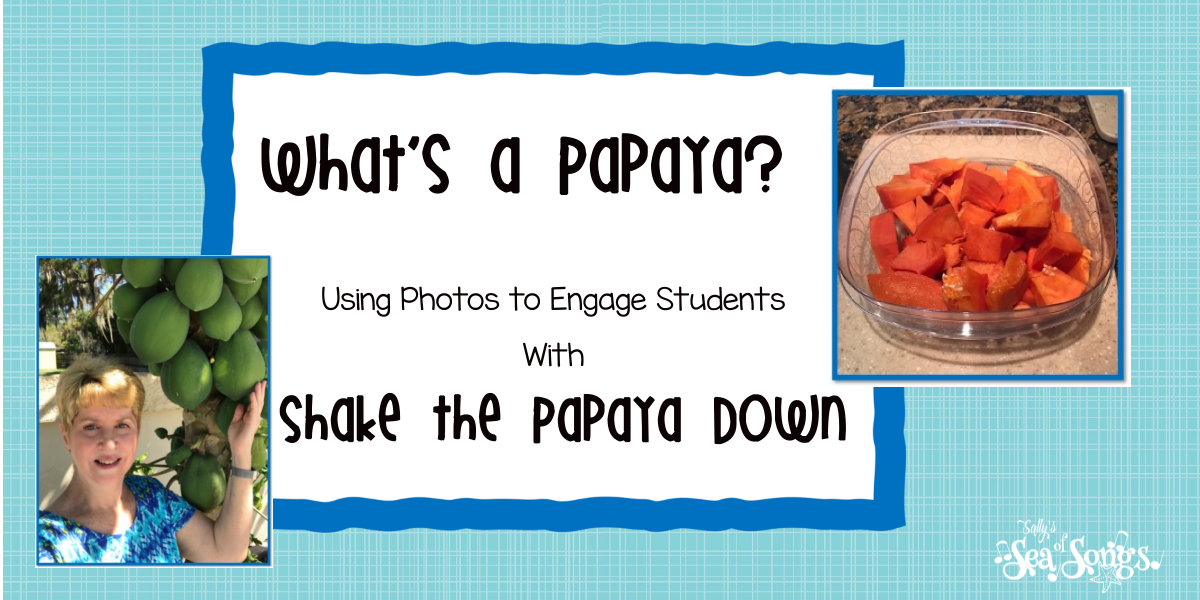
It had been a very long time (pre-pandemic) since I have seen my sister and her family.  We finally had the chance to travel to Florida for a much needed visit and I was pleasantly surprised to find that they have papaya trees growing in their yard!  Sweet!  I was humming calypso all week.

I have used the song Shake the Papaya Down many times over the years and always have to give an explanation on what are papayas and why are we shaking them down?  Students will become more engaged with a lesson when they have some background knowledge on the topic. Papayas aren’t found in too many grocery stores, so not many families are able to include them in their regular meals.

I know my students would love to see my pictures.  Maybe you and your students will like to see them, too.

What are papayas?


Papayas are a soft tropical fruit that is yellowish-orange in color. They are healthy, low-calorie food, with lots of vitamins, minerals, and fiber.


Introducing character education into the music room can be as empowering as a superhero's cape. By guiding students to recognize their positive character traits, we not only boost their self-esteem but also foster crucial social-emotional learning skills. Inspired by this notion, I embarked on a mission to infuse our lessons with the essence of heroism, drawing inspiration from a fantastic bulletin board shared by James Michael Foster's post in the Elementary Music Teachers Facebook Group.  Let me share how we soared through this musical adventure, blending character education with catchy tunes and creative expression.


Get 'Em Singing

To kick off our journey, we launched into a song celebrating various character traits. Using the Quaver Attendance Song, I encouraged students to select words that depicted their strengths. Together, we crafted a list with words like brave, positive, fearless, active, strong, and confident. We proudly chose and belted out these words to describe our class. And for those without access to Quaver, fear not! Music K-8 Magazine offers a treasure trove of alternatives, each brimming with melodies that uplift and inspire. Some of my favorites are:
  • From the Inside Out, Volume 11 Number 1
  • Responsible, Volume 11 Number 2
  • Character Tango, Volume 19 Number 4
  • Positive, Volume 22 Number 1

Super Hero Theme Songs - Engaging Student Interest

Copyright: <a href='http://www.123rf.com/profile_malchev'>malchev / 123RF Stock Photo</a>

Next, we delved into the heart of our lesson: superhero theme songs. After introducing the concept, each class eagerly chose 2-3 theme songs to explore. Before hitting play, I challenged them to share at least things they knew about the movie or character, sparking lively discussions. I asked them to listen for music elements that the composer put into the music that might represent these 3 things.  For instance, when dissecting the Ghostbusters theme, students astutely identified musical elements mirroring the action-packed chase scenes and eerie encounters with ghosts. They even identified certain sound effects that might represent the ghost-catching contraption and the slime. Witnessing their analytical skills at work was a true marvel, showcasing the depth of their musical comprehension.

Make it Personal

But our journey didn't end there; it circled back to our students themselves. Armed with their list of positive traits, each student selected two words embodying their inner heroism. Then, with thoughtful consideration, they chose instruments to represent these traits in their own theme song, justifying their selections with gusto. Through peer discussions and a quick writing exercise, they articulated their thoughts, solidifying their understanding and embracing their unique strengths.


Click on the picture to download a printable copy of the superhero writing paper.  The cute superhero kids come from Graphics from the Pond.


Click on the color picture for a full color Google Slides version of the response sheet.

Displaying Student Work


With pride, we showcased their creative endeavors, adorning our bulletin board with their superhero-themed compositions. Thanks to the vibrant Super New Year in Music set from the Bulletin Board Lady, Tracy King, our display radiated with the energy and enthusiasm of our budding musicians.
Free WAKELET Lesson

For those eager to embark on their own superhero-themed journey, I invite you to explore our Wakelet lesson. May it inspire you to ignite your students' imaginations and lead them on a musical odyssey filled with courage, creativity, and camaraderie.

Superhero Theme Songs

As our musical adventure draws to a close, I encourage you to embrace the superhero within each of your students. By nurturing their character and creativity, we empower them to soar to new heights, making this year truly SUPER!

Musically yours,